

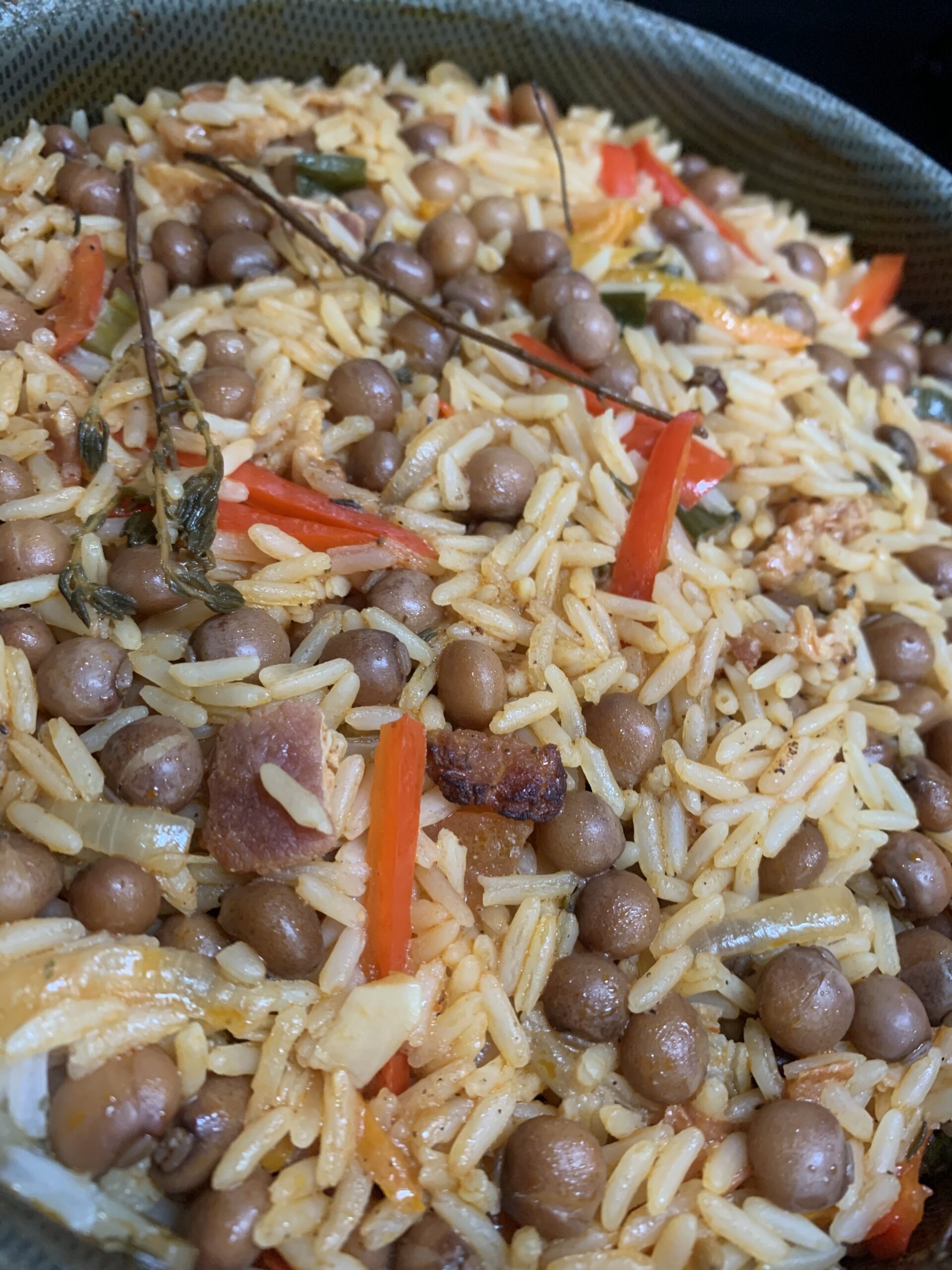
Pigeon Peas and Rice, The Way My Family Makes It
If conch salad is the dish I make when I want a taste of home, fast and bright. This pigeon peas and rice recipe is the one I make when I want Sunday dinner. This is a staple — the kind of dish that shows up at almost every gathering, and the kind everyone has their own version of. This is mine, made the way it’s always been made in my house passed down by my grammy and daddy.
Pigeon Peas and Rice Recipe
- 1 cup pigeon peas (dried, soaked overnight, or canned)
- 2 cups long-grain rice, rinsed
- 4 oz salt pork or bacon, diced
- 1 medium onion, diced
- 1 green bell pepper, diced (optional)
- 2–3 sprigs fresh thyme
- 2 tbsp tomato paste
- 1 whole scotch bonnet pepper (left whole, not cut)
- 2½ cups water or chicken stock
- Salt and pepper, to taste
- 2 tbsp oil
Method
Render the salt pork. In a large, heavy-bottomed pot, cook the diced salt pork or bacon over medium heat until browned and the fat has rendered out.
Build the base. Add the onion and bell pepper to the pot and cook until softened. Stir in the tomato paste and cook for another minute or two until it darkens slightly.
Add the peas. Stir in the pigeon peas, thyme, and the whole scotch bonnet pepper. Keep the pepper whole — you want the flavor and heat, not the full burn of a broken pepper.
Add liquid and simmer. Pour in the water or stock, bring to a simmer, and let the peas cook until they’re tender — about 20–25 minutes if using pre-soaked dried peas, less if using canned.
Add the rice. Stir in the rinsed rice, season with salt and pepper, and bring back to a simmer. Cover, reduce the heat to low, and let it cook undisturbed for about 20 minutes, until the rice is tender and the liquid is absorbed.
Rest, then fluff. Remove from heat, let it sit covered for 5 minutes, then fluff with a fork before serving. Remove the whole scotch bonnet before serving unless your household likes to leave it in as a warning to the heat-sensitive.
Why this one
Everyone’s grandmother makes this slightly differently, and that’s part of what makes it special — it’s less a fixed recipe and more a shared foundation everyone builds on. This is the version I grew up on, and it felt right to have it be part of this blog’s return.
A note on the coconut milk variation
Some households make this with coconut milk instead of (or alongside) water, which gives the rice a slightly sweet, tropical richness. If you want to try it that way, simply swap the 2½ cups of water for 1 can of coconut milk, and reduce the salt slightly since coconut milk brings its own natural sweetness to balance. Both versions are equally “right” — it really comes down to what your family grew up making.
If this one reminded you of home, subscribe below for more traditional recipes like it — and follow me on Substack so you’re first to know when the next one goes up.
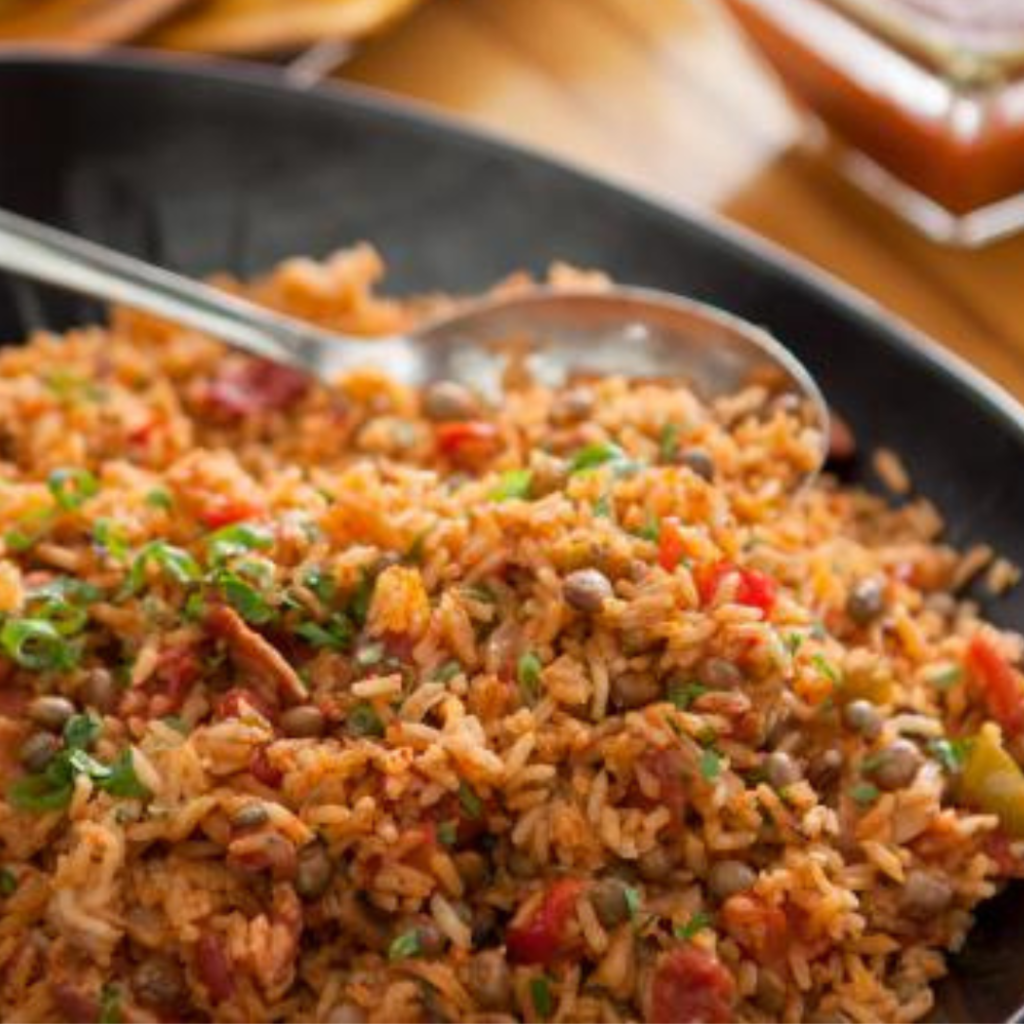
1. Soak the Peas if you’re using dried Pigeon Peas:
- Presoak for 3 to 8 hours or overnight in double the amount of water.
- Drain, rinse, and add to a pot or pressure cooker.
- Fill the pot with enough fresh water to ensure the level is 1 inch above the peas. Cover with a lid.
- Cook at high heat for one hour in a pot (adding more water if needed to maintain the level) or 15 minutes in a pressure cooker. The peas should be tender but not crunchy or mushy.


3 comments
Thank you
thank you
thank you